Hi, my name is

Zarif Ahmad Razin Bhuiyan

PhD Student · Heat Transfer in Soft Matter

I’m a PhD student and Graduate Research Assistant in Mechanical and Aerospace Engineering at North Carolina State University, working in Dr. Jun Liu’s Nanoscale Heat Transfer Lab. I use molecular simulations to understand how heat moves through polymers and other soft materials at atomic scale.

Zarif Ahmad Razin Bhuiyan profile image

About Me

I study nanoscale heat transfer in polymers and soft matter: how heat is carried, stored, and blocked when structure at the scale of atoms and molecules controls it. My core methods are molecular dynamics (LAMMPS), polymer structure building with EMC (Enhanced Monte Carlo), and density functional theory (Gaussian). My work spans two themes. At solid–liquid interfaces, I have studied nano-confined liquids, surface wettability, and glucose–carbon nanotube interfaces. In thermal transport, I have worked on hybrid perovskites, polymer composites, and the glass transition.

I joined NC State in Fall 2024 with a Provost Doctoral Fellowship. Before that, I graduated with Honours in Mechanical Engineering from Bangladesh University of Engineering and Technology (BUET) in 2022, and taught as a Lecturer at Sonargaon University and as a Teaching Assistant at BUET.

I enjoy teaching, and I share tutorials and simulation scripts on this site, including a beginner’s guide to molecular dynamics with LAMMPS based on a guest lecture I gave at NC State.

I was born in Cumilla, Bangladesh, and grew up in the village of Kalipur in Chandpur, on the banks of the Meghna River.

Research expertise:
  • Nanoscale Heat Transfer
  • Polymers & Soft Matter
  • Molecular Dynamics / LAMMPS
  • Polymer Building / EMC
  • DFT / Gaussian
  • FEA & CFD / ANSYS
  • Python, MATLAB
Publications
Journal Article Perovskites Publication
Z. Wang, L. Yan, A. Negi, Q. Wang, Z. A. R. Bhuiyan, X. Zhong, A. H. Comstock, S. Mukherjee, Y. Yu, C. Yang, A. Jouneghaninaseri, S. Khan, T. Wang, S. Raza, J. Hu, Y. Nabei, X. Gu, H. Shao, M. Liu, Q. Tu, H. Ade, J. Zhou, D. Sun, W. You, and J. Liu, "Extremely low thermal conductivity in rigid layered hybrid perovskites," Science Advances, vol. 12, no. 38, pp. eaee5269, 2026.
DOI Details
Abstract:

Materials with exceptionally low thermal conductivity are desirable for thermal insulation and waste heat recovery. While foams and aerogels boast ultralow thermal conductivities akin to air, lack of mechanical stiffness in these soft materials necessitates a paradigm shift in materials design that can offer thermal insulation and mechanical rigidity simultaneously. Here, we show that spun-cast layered hybrid organic-inorganic perovskite thin films, azobenzene ethyl ammonium lead iodides, exhibit a record-low thermal conductivity, down to ∼0.04 watts per meter per kelvin at room temperature, while maintaining mechanical rigidity with an elastic modulus of 7.7 gigapascals that surpasses that of most plastics, foams, and aerogels. This unusual combination of ultralow thermal conductivity and high mechanical rigidity is attributed to the specially engineered organic cations in the layered structure. Our finding highlights the potential of molecular engineering in hybrid layered structures to push the extreme of thermal insulation in dense, rigid solids.

Journal Article Polymers Publication
H. Worden, M. Chandra, Y. Zhou, Z. A. R. Bhuiyan, M. Cheng, K. Munusamy, D. Nghiem, W. Hu, W. Yan, S. Wu, R. Li, J. Zhang, A. Chatterji, S. Zhang, I. N. Ivanov, J. Chen, J. C. Lasseter, M. Jin, D. Abitagaoglu, Q. Tu, T. Emrick, J. Liu, and Y. Xu, "Suppressing Thermal Transport in Nonporous Polymer Hybrids by Limiting Thermally Accessible Vibrational Modes," Materials Horizons, vol. 13, no. 12, pp. 5876-5887, 2026.
DOI Details
Abstract:

Achieving low thermal conductivity in nonporous polymer materials without compromising mechanical integrity remains a longstanding challenge. Conventional strategies, such as introducing porosity, are inherently limited in dense systems. Here, we demonstrate that thermal transport in polymer–organic filler hybrids is closely associated with the engineered availability of thermally accessible vibrational modes, rather than individual interfacial resistance or porosity. Using PU/organic filler hybrids as a model system, we show that incorporating rigid organic motifs shifts the vibrational density of states toward higher frequencies, where vibrational modes are weakly thermally populated at ambient conditions. This limits the number of heat-carrying channels, leading to suppressed thermal conductivity despite negligible individual interfacial resistance (~10⁻⁹ m² K W⁻¹). These findings provide initial evidence that vibrational mode engineering may offer a promising molecular-level route for reducing thermal conductivity in dense polymer-organic hybrid systems.

Journal Article Molecular Dynamics Nano-scale
P. Das*, Z. A. R. Bhuiyan*, A. K. M. M. Morshed, and T. C. Paul, "Thermal properties of liquid entrapped between hybrid wettability surface," Computational Materials Science, vol. 244, pp. 113232, 2024.
* Equal contribution / Co-first authors
DOI Details
Abstract:

Molecular dynamics (MD) simulations were conducted to investigate the impact of hybrid wettability on thermal properties, specifically focusing on the constant volume molar heat capacity and thermal conductivity of Nano-confined liquid (NCL). The simulation domain, maintained at a temperature of 100 K, consisted of a $\sim 3\text{ nm}$ thin film of liquid argon entrapped between two solid copper surfaces with hybrid wettability. Hybrid wettability surfaces were produced by varying the solid–liquid interaction parameter and applying two different wettability factors ($\mu$) to the same surface. In this study, key findings pertaining to the influence of hybrid wettability on heat capacity and thermal conductivity include: (i) The heat capacity of liquid confined within hybrid wettability surfaces surpasses the heat capacity of the liquid in its bulk form. …

Project Overview

When liquids are confined within nanoscale gaps such as in advanced micro/nanochannel heat sinks, thermal interface materials, and nanofluidic cooling devices, their thermophysical behavior deviates fundamentally from bulk fluid dynamics. Interfacial effects, solid-liquid interaction potentials, and atomic density layering dominate the energy storage and transport characteristics of the entrapped fluid.

While previous studies focused primarily on uniformly hydrophilic or uniformly hydrophobic surfaces, practical engineering surfaces inherently exhibit chemical heterogeneity. This research investigated the thermal properties of nano-confined liquid (NCL) entrapped between solid copper surfaces engineered with hybrid wettability, utilizing equilibrium molecular dynamics (EMD) simulations performed with LAMMPS.


Key Scientific Findings

  1. Enhanced Specific Heat Capacity: Demonstrated that the constant volume molar heat capacity ($C_v$) of liquid argon entrapped between hybrid wettability surfaces is significantly higher than its bulk counterpart ($20\text{ J/(mol}\cdot\text{K)}$).
  2. Tunability via Surface Fraction: Identified how the hydrophilic area fraction ($f$) governs specific heat capacity, thermal conductivity, interfacial fluid layering, localized mass density profiles, and total system energy fluctuations.

💻 Open-Source LAMMPS Code & GitHub Repository

To promote reproducible computational research, the complete LAMMPS simulation script, parametric loops, and data post-processing routines are openly shared on GitHub:

👉 GitHub Repository: zarifrazin/ncl_hybrid_wettability

The repository includes:

  • in.ncl_hybrid: The master LAMMPS input deck containing the system initialization, lattice creation, region partitioning, and velocity distribution.
  • Parametric Loops: Automated nested scripts looping over wettability combinations ($w_I, w_O$) and area fractions ($f$).
  • Property Calculations: Fluctuation formulas for calculating $C_v$, mean squared displacement (MSD) for diffusion, radial distribution functions (RDF), and density profiles across the channel.
  • Log & Output Parsers: Guidance on parsing thermodynamic outputs and extracting publication-grade datasets.

📊 Presentation Slides

Below are the presentation slides from my talk on this research, outlining the molecular dynamics framework, interfacial phenomena, and thermal property results:

hybrid_ncl_presentation.pdf
Research & Projects
Thermal Properties of Entrapped Liquid
Research
Molecular Dynamics LAMMPS Thermal Properties Wettability
Thermal Properties of Entrapped Liquid

Open-source LAMMPS simulation code for nano-confined liquids with hybrid wettability [Computational Materials Science Q1, IF: 3.1].

3D Printer Project
Engineering
SolidWorks Arduino Marlin Calibration
3D Printer Project

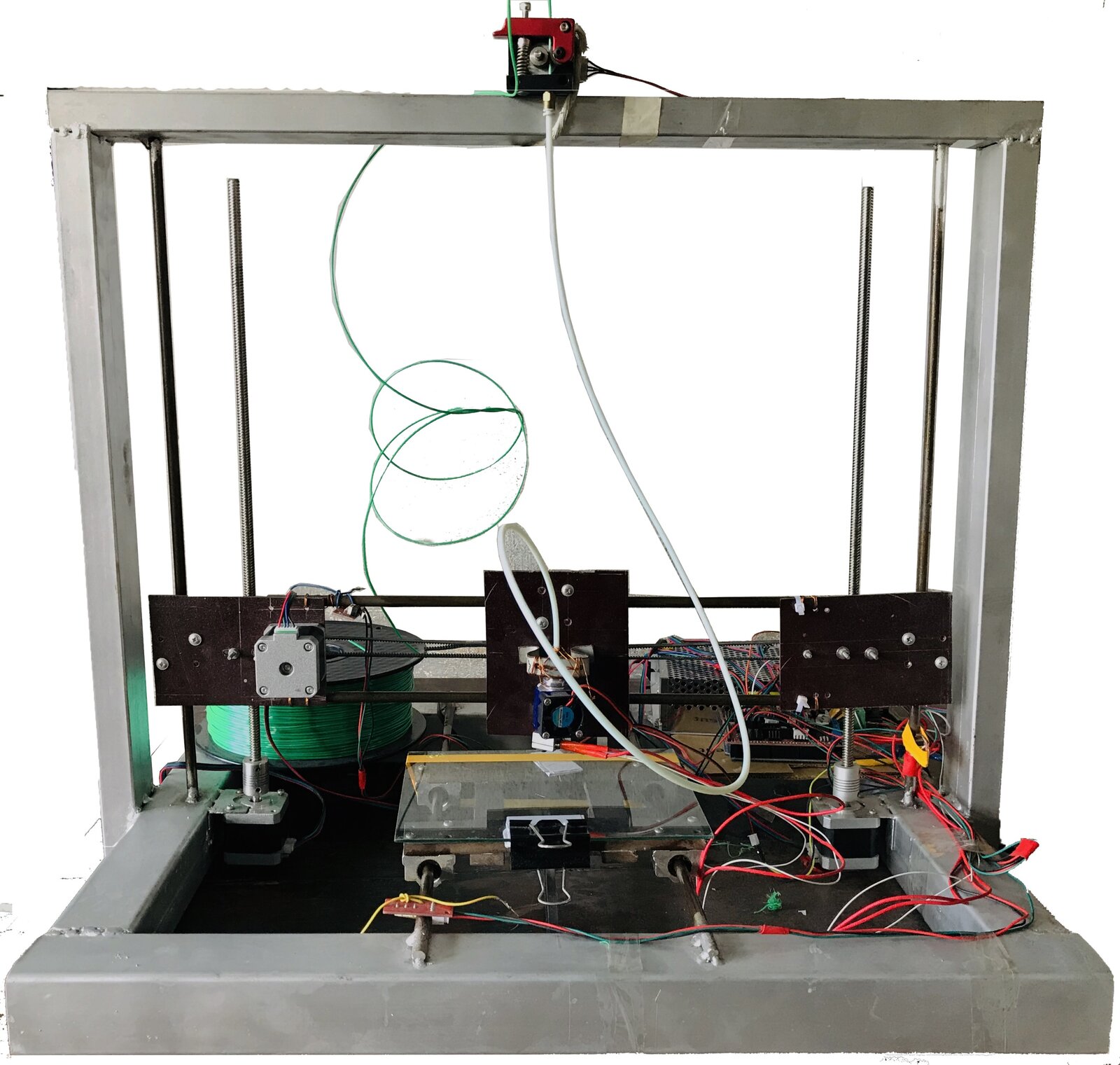
Group project for ME 366 (Electro-Mechanical System Design and Practice) at BUET: designed and built a CNC 3D printer from locally available parts, …

Shell & Tube Heat Exchanger
Engineering
Thermal Design MATLAB HTRI ASME Code
Shell & Tube Heat Exchanger

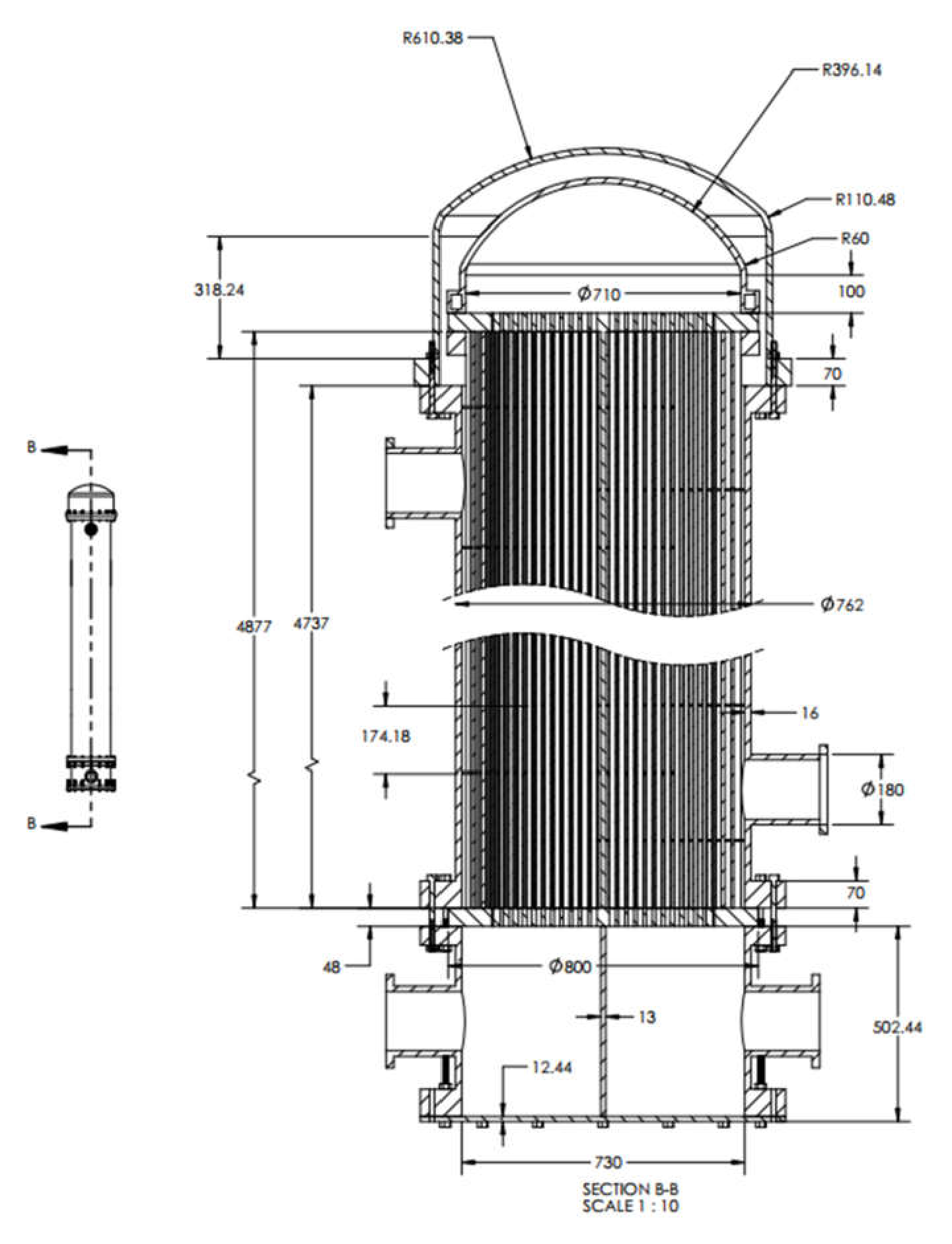
Group project for ME 310 (Thermo-fluid System Design) at BUET: thermal and mechanical design of a shell and tube oil cooler for a marine application, …

Research Resources
Tutorials & Guides
New to LAMMPS? A Beginner's Guide to Molecular Dynamics

A hands-on, step-by-step guide to building atomic structures and running your first molecular dynamics simulations in LAMMPS, with …

LAMMPS Molecular Dynamics
View Details
Simulation Scripts
LAMMPS Script for Specific Heat Calculation

An input script for LAMMPS to calculate specific heat capacity of confined argon under solid copper walls.

LAMMPS Molecular Dynamics
View Details
Tutorials & Guides
Matplotlib Templates for Multi-Panel Journal Figures

Ready-to-use Matplotlib templates for effortlessly creating publication-quality multi-panel scientific figures in Python.

Matplotlib Python
View Details

Experience

Fall 2025 - Present
  • Supervisor: Dr. Jun Liu, Department of Mechanical and Aerospace Engineering.
  • Research: Nano-scale thermal transport using Molecular Dynamics (MD) simulations.
May 2023 - June 2024
  • Offered courses: Fluid Mechanics I, Fluid Mechanics II, and Metallic Materials.
  • Instruction & Mentorship: Delivered lectures and mentored undergraduate students in design projects and lab session experiments.
November 2022 - May 2023
  • Assigned courses: Heat Transfer Equipment Design Sessional, Mechanical Engineering Drawing, and Heat Transfer Sessional.
  • Grading & Guidance: Graded coursework and provided academic instruction/lab guidance to undergraduate students.

Education

I have pursued my passion for learning and honing my skills through a strong educational foundation. Here is a glimpse of my educational background:

PhD in Mechanical Engineering

North Carolina State University (NCSU)
August 2024 - Present
  • Department: Department of Mechanical and Aerospace Engineering.
  • Research Focus: Nano-scale Thermal Transport, Molecular Dynamics, Soft Matter
  • Location: Raleigh, North Carolina, USA.

Master of Science in Mechanical Engineering

North Carolina State University (NCSU)
Fall 2026
  • Degree Type: En route master’s, earned during the PhD program.
  • GPA: 4.00/4.00.
  • Department: Department of Mechanical and Aerospace Engineering.
  • Location: Raleigh, North Carolina, USA.

Honors & Activities

Guest Lecture, MAE 720
September 2025

Delivered a two-part guest lecture on molecular dynamics simulation with LAMMPS and OVITO in MAE 720: Molecular Level Modeling for Engineering Applications at North Carolina State University. The lecture is now available as a beginner’s guide.

Provost Doctoral Fellowship
Fall 2024 - Summer 2025

Awarded the Provost Doctoral Fellowship by North Carolina State University (NCSU) for the first year of PhD study in Mechanical Engineering.

Graduation with Honours
May 2022

Graduated with Honours from Bangladesh University of Engineering and Technology (BUET), awarded for completing the B.Sc. in Mechanical Engineering with a CGPA of 3.75 or higher.

Life Events
Master's Degree
Academic Life Event
Master's Degree

Fall, 2026

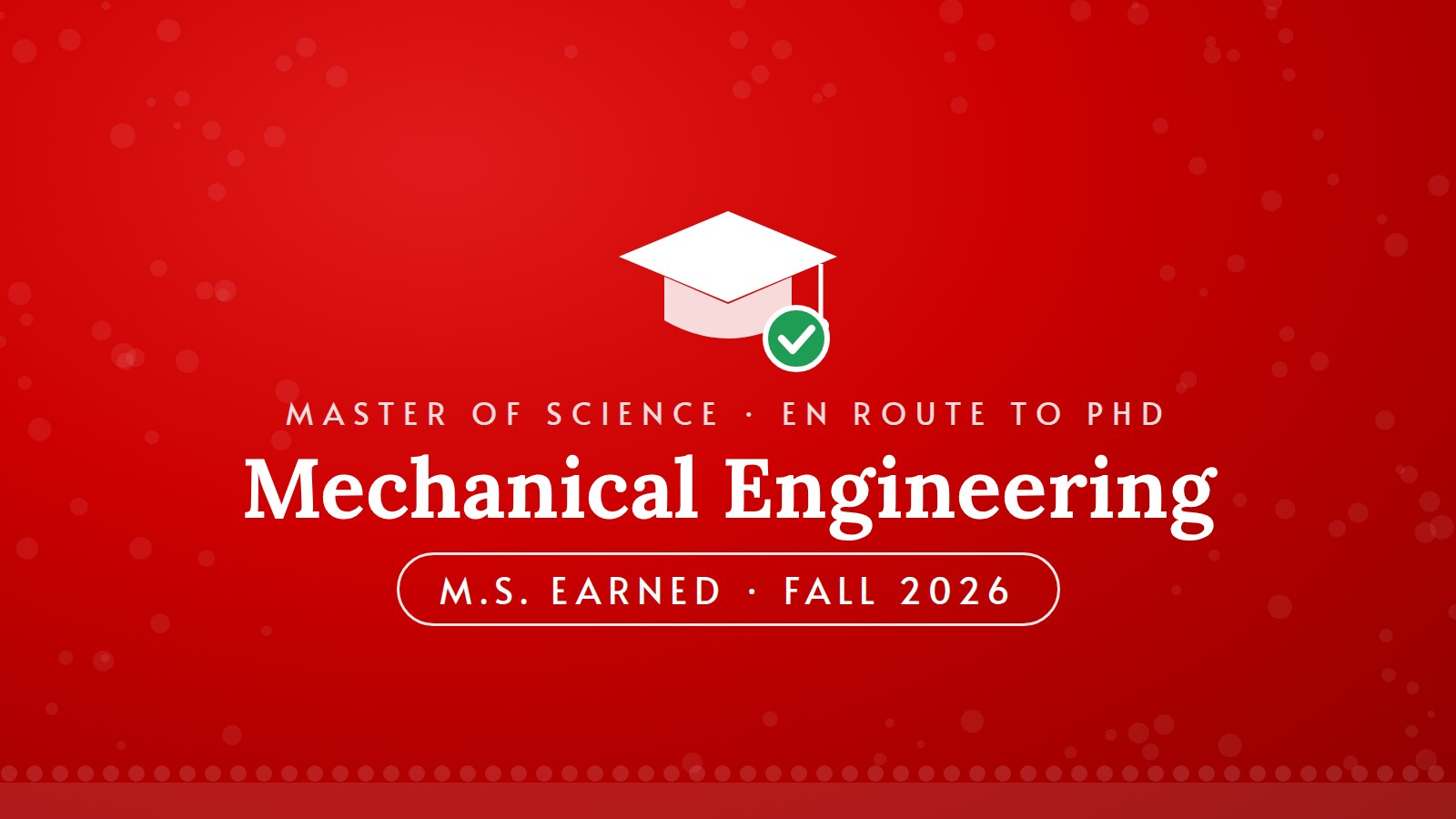
I earned my Master of Science (M.S.) in Mechanical Engineering from North Carolina State University in Fall 2026. This is an en route master’s degree, earned along the way to my PhD.

Passed Qualifying Exam
Academic Life Event
Passed Qualifying Exam

Spring, 2026

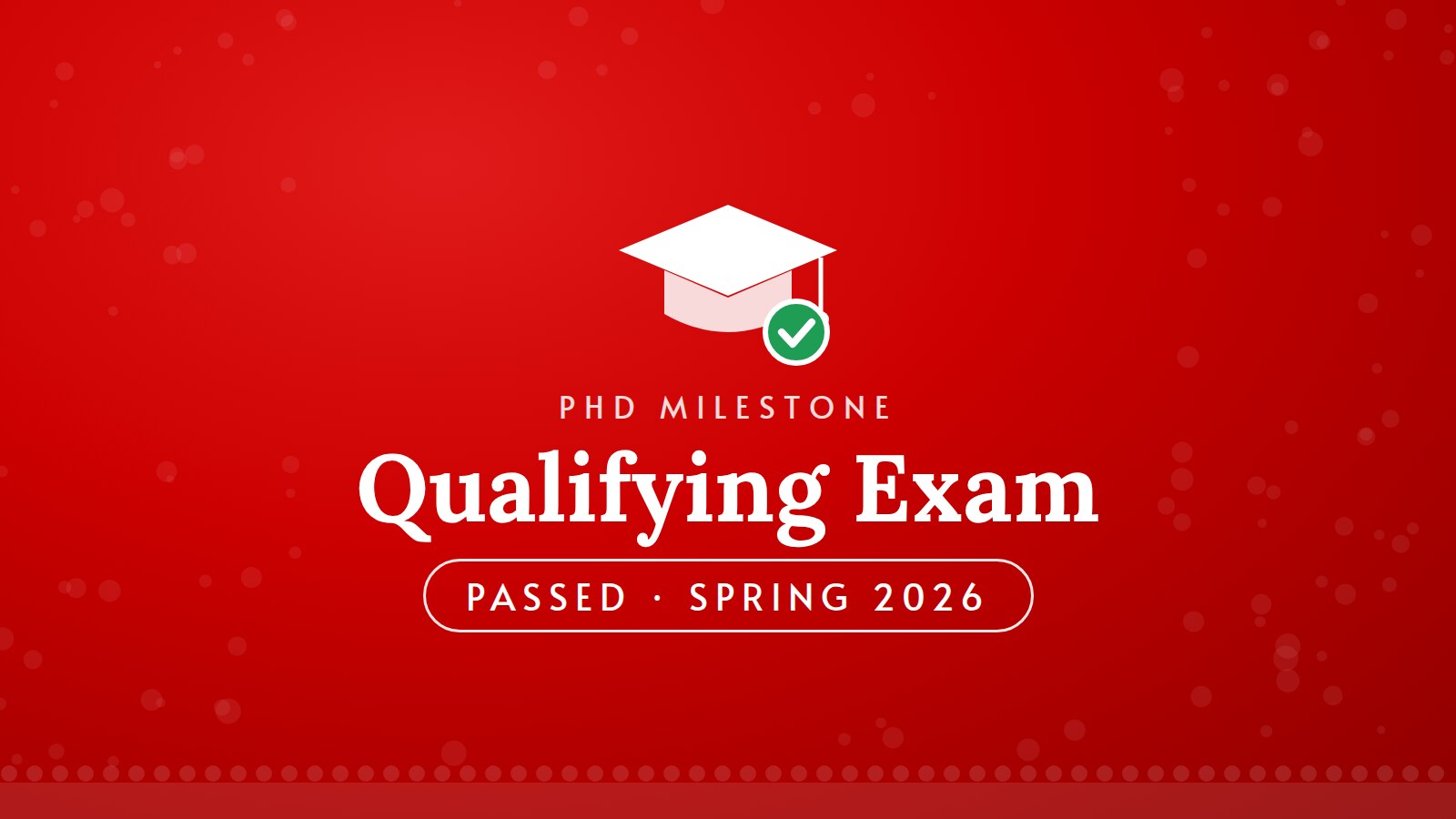
I passed my PhD qualifying exam in Spring 2026.

Parenthood
Personal Life Event
Parenthood

March, 2025

I became a father in March 2025, by the grace of Almighty Allah. Our son’s name is Ibad (Ibu).